
Climate change isn’t just about rising temperatures — it’s about how shifts in rainfall patterns can reshape entire regions of the planet. Nowhere is this more dramatic than in Africa, where scientists warn that excessive rainfall could transform the Sahara and upend the continent’s fragile balance in profound ways. These findings challenge long-held assumptions about one of the driest places on Earth and carry implications for ecosystems, agriculture, and societies across Africa and beyond.
For a complete breakdown of the study behind this alarming projection and what it could mean for the future, be sure to read Excessive Rainfall Could Transform the Sahara and Upend Africa’s Fragile Balance, Warns Study — a thought-provoking look at how climate dynamics might play out in the decades ahead.
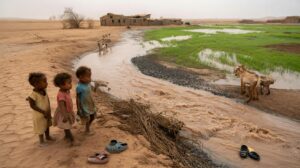
Changing Rainfall in the Sahara
Traditionally, the Sahara Desert is synonymous with extreme heat, relentless dryness, and lifeless stretches of sand. But recent climate research suggests that rising global temperatures could bring significantly more rainfall to parts of North Africa by the end of the century — potentially up to 75% more than historical averages. This could fundamentally alter the desert’s character, turning bare sand into patches of semi-arid grassland or seasonal savanna in areas that were once inhospitable.
Scientists point out that this isn’t just occasional drizzle — much of the increase is expected to come from intense, storm-driven downpours rather than gentle rain, which can lead to sudden flooding and erosion in places with little drainage infrastructure.
Ripple Effects Across Africa
The potential consequences of a wetter Sahara go far beyond increased vegetation. A shift in rainfall patterns could disrupt long-established weather systems like the West African monsoon, affecting agriculture, water availability, and seasonal cycles for millions of people throughout the Sahel and sub-Saharan regions.
Communities in countries such as Niger, Mali, and Chad are already tuned to the delicate rhythms of short rainy seasons followed by long dry spells. Sudden increases in downpours could wash away seeds, flood fields, and strain fragile infrastructure — making farming more unpredictable rather than more productive.
Agricultural economies across Africa depend heavily on rain-fed crops. If rainfall becomes more erratic — intense in some years and scarce in others — food security could be further threatened in regions that are already vulnerable to climate extremes. And because the Sahara plays a key role in continental weather patterns, changes there could have cascading effects on rainfall far to the south, as well as in coastal regions.
Opportunities and Risks
While more rain might sound like a blessing in one of the driest landscapes on Earth, the reality is more complex. Increased water could help recharge aquifers, support new vegetation, and even open opportunities for rain-fed agriculture in areas that were once barren.
Yet, these benefits are counterbalanced by serious risks:
-
Flash floods and soil erosion due to heavy downpours
-
Disrupted farming calendars with unpredictable rainy seasons
-
Pressure on infrastructure not built for sudden, intense storms
-
Ecological shifts that may favor invasive species over native plants
Policymakers and development planners must consider both the promise and peril of changing rainfall patterns if communities are to adapt successfully.
For more detailed insights into the science behind these projections and their broader implications, explore Excessive Rainfall Could Transform the Sahara and Upend Africa’s Fragile Balance, Warns Study — a compelling resource for anyone wanting to understand how Earth’s climate dynamics are shifting.